




Posted on 20 January 2026
Comprehensive Guide to Buying Ski Property in the French Alps
Property for Sale in the French Alps – A Numbered Guide to Alpine Real Estate in France
Purchasing property in the French Alps, whether for personal use, investment, or holiday purposes, is widely regarded as one of the most secure and rewarding options in Europe. France offers a transparent legal system, strong property rights, and a diverse real estate market ranging from ski apartments in the centre of a resort, countryside residences to world-class ski properties in the Alps.
This guide provides a clear overview of the French property buying process, financing options, and key considerations, with particular relevance for international buyers and those interested in Alpine ski resorts.
Initial Steps
1. Start Searching for Properties
Begin your search by exploring properties that match your lifestyle goals and budget. France offers a broad range of options, from coastal homes and rural farmhouses to luxury chalets in the Alps. For ski buyers, popular regions include the French Alps, where demand is strong and supply is tightly controlled.
2. Find the Right Real Estate Agent
Choosing an experienced agent is essential. A good agent should have strong local knowledge, experience with foreign buyers, and a clear understanding of the legal process. In ski resorts, specialist Alpine agents are particularly valuable due to local planning rules, rental regulations, and seasonal demand.
3. Make an Offer
Once you find a suitable property, you can submit an offer (offre d’achat). If accepted, the property is usually taken off the market. Negotiation is common in France, although pricing in prime ski resorts can be firm due to limited supply.
Legal and Financial Process
4. Sign the Preliminary Contract (Compromis de Vente)
After your offer is accepted, a preliminary contract known as the Compromis de Vente is signed. This legally binding document sets out the terms of the sale, price, and conditions. Buyers benefit from a mandatory cooling-off period of 10 days, during which they can withdraw without penalty.
5. Secure Financing
French banks offer mortgages to non-residents, typically lending up to 70–80% of the purchase price, subject to financial status. Interest rates in France are traditionally competitive by European standards. Many buyers of ski property combine personal funds with French financing for tax and planning efficiency.
6. Open a French Bank Account
While not legally mandatory in all cases, a French bank account is highly recommended. It simplifies mortgage payments, utility bills, local taxes, and ongoing property expenses.
7. Pay the Deposit
Upon signing the Compromis de Vente, a deposit—usually around 5–10% of the purchase price—is paid into a secure notary account.
Surveys, Completion and Ownership
8. Property Diagnostics and Surveys
French law requires the seller to provide a comprehensive diagnostic report covering aspects such as energy efficiency, asbestos, lead, and electrical safety. Structural surveys are not mandatory but can be commissioned for additional reassurance, particularly for older chalets or village properties.
9. Final Completion and Signing the Title Deed
The final deed of sale (Acte de Vente) is signed at the notary’s office, usually 2–3 months after the preliminary contract. The notary (notaire) is a state-appointed official who acts impartially for both parties and ensures the transaction is legally secure.
10. Pay Taxes and Fees
Buying costs in France typically include:
Notary fees and registration taxes: approximately 7–8% for resale properties
Reduced fees for new-build properties
Legal work is included within notary costs
These costs are transparent and fixed by law.
Post-Purchase Considerations
11. Inheritance Planning
French inheritance laws differ from those in the UK and include forced heirship rules. Buyers are strongly advised to seek specialist legal advice to structure ownership correctly, particularly for families and high-value Alpine properties.
12. Utilities, Insurance and Management
Home insurance is mandatory in France. Utilities are transferred into the new owner’s name, and ski properties may also require management arrangements for winter access, snow clearance, and rental management.
13. Planning for Ongoing Costs
Ongoing costs include:
Annual property taxes (taxe foncière and taxe d’habitation, where applicable)
Service charges for apartments and managed residences
Maintenance and seasonal upkeep
Property Types and Buying Options
Freehold Ownership
Most property in France is sold freehold, giving full ownership of the property and land. This is the most common and secure form of ownership.
Types of Properties
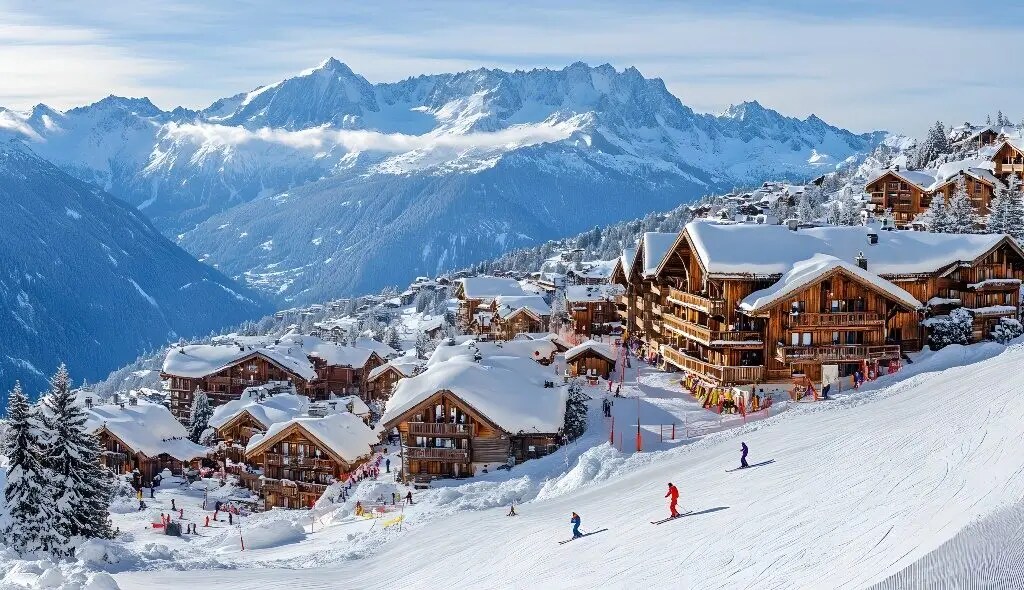
Apartments: Popular in ski resorts, often within managed residences
Chalets: Detached or semi-detached Alpine homes with strong rental appeal
New-Build Developments: Often offer reduced notary fees and optional rental schemes
Popular Ski Resorts in France
France is home to some of the world’s most renowned ski destinations, offering excellent rental demand and long-term value.
Key resorts include:
Chamonix – iconic, year-round Alpine town
Courchevel – part of Les Trois Vallées
Meribel – central access to vast ski terrain
Val d’Isere – high altitude and snow reliability
Les Deux Alpes – glacier skiing and strong rental appeal
These resorts benefit from limited land availability, strong international demand, and excellent infrastructure.
Frequently Asked Questions
Can foreigners buy property in France?
Yes. France has no restrictions on foreign property ownership.
Are mortgages available to non-residents?
Yes. French banks regularly lend to international buyers, subject to affordability checks.
Can I rent out my property?
Yes. Rental income is permitted, and ski properties are particularly popular for seasonal lets. Local registration rules may apply.
What are the costs of maintaining a property in France?
Costs include property taxes, insurance, utilities, service charges, and general maintenance.
What is the role of the notary?
The notary oversees the legal process, verifies ownership, manages funds, and registers the property in the buyer’s name.
Can I buy property through a company?
Yes. Property can be purchased through a French or foreign company, which may offer tax and inheritance planning advantages.
Conclusion
Buying property in France is a structured, transparent, and highly secure process. Whether you are purchasing a city apartment, a countryside retreat, or a ski chalet in the French Alps, understanding the legal framework, financing options, and long-term costs is essential.
By following this guide and taking professional legal and financial advice, you can approach the French property market with confidence and secure a property that meets both lifestyle and investment objectives.
Property for sale in the French Alps
Learn more here: click here